
Uncategorized
Calming Ingredients for Sensitive Skin: How to Choose What Works Best for You
Understanding calming ingredients and choosing which ones work best for your skin is one of the most important steps in caring for sensitive skin.
The reason is that sensitive skin is often misunderstood. It’s not simply about redness or occasional irritation — it’s about how easily the skin reacts, how quickly it becomes overwhelmed, and how long it takes to recover once it’s been triggered.
Many people with sensitive skin feel stuck in a cycle of trial and error. A product may work for someone else but cause stinging, breakouts, or prolonged redness on their own skin. Even products labeled “gentle” or “soothing” don’t always deliver the same results for everyone.
Rather than looking for a single “best” ingredient, it’s more helpful to understand:
- What sensitive skin actually is
- How calming ingredients work
- When certain calming ingredients are more appropriate than others
- How to use them without overwhelming the skin
- Common mistakes when doing skincare for sensitive skin
This guide explores the most commonly used calming ingredients for sensitive skin, explains how they work in an easy-to-understand way, and helps you decide when to use each one depending on your skin’s sensitivity level and needs.
What Is Sensitive Skin?
Sensitive skin is not a medical diagnosis or a single skin type. It is a skin condition that can affect dry, oily, acne-prone, or combination skin.
Skin is generally considered sensitive when it reacts more easily than normal to factors that are usually well tolerated, such as skincare products, environmental changes, temperature shifts, friction, or stress.
Common Signs of Sensitive Skin
Sensitive skin may present as:
- Redness or flushing
- Burning, stinging, or tingling sensations
- Tightness or discomfort after cleansing
- Itchiness or a warm feeling
- Breakouts triggered by new products
- Skin that feels fine one day and reactive the next
Dermatology-based sources consistently point to two major contributors:
a weakened skin barrier and heightened nerve reactivity.
When the barrier is compromised, the skin loses moisture more easily and allows irritants to penetrate deeper. This makes the skin more reactive, slower to recover, and harder to keep balanced.
This is where calming ingredients become essential.
Why Calming Ingredients Matter for Sensitive Skin
Calming ingredients support sensitive skin in two important ways:
- They help reduce irritation and discomfort, sometimes quickly
- They support long-term barrier recovery, allowing skin to become more resilient over time
Some calming ingredients provide fast relief during flare-ups, such as easing redness or soothing heat. Others work more gradually, strengthening the skin barrier and improving tolerance with consistent use.
Both short-term comfort and long-term recovery are important — and different calming ingredients serve different roles.
Understanding these differences helps you choose ingredients based on what your skin needs right now, rather than following trends or one-size-fits-all advice.
What Makes an Ingredient “Calming”?
A calming ingredient isn’t defined by how basic or inactive it sounds. Instead, calming ingredients typically:
- Help reduce visible redness, heat, or irritation
- Improve skin comfort and reduce tightness or stinging
- Support barrier repair and recovery
- Are generally well tolerated by sensitive skin
Some calming ingredients can provide immediate soothing effects, which is especially helpful during irritation or flare-ups. Others may not feel dramatic at first but help the skin recover more completely when used consistently over time.
For sensitive skin, calming ingredients are not just supportive — they often form the foundation of a sustainable routine.
What are The Calming Ingredients Commonly Used in Skincare?
Ceramides: The Structural Support of Calm Skin
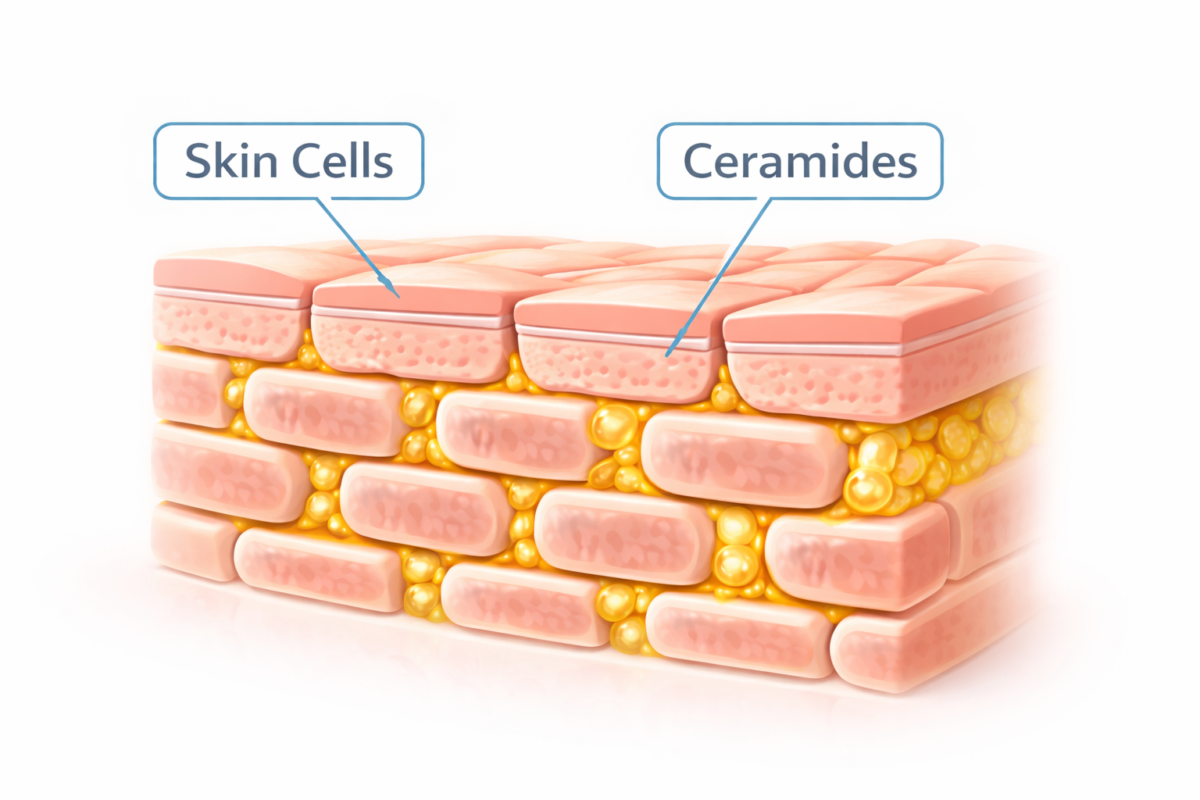

Ceramides are one of the most important calming ingredients for sensitive skin because they play a structural role in the skin barrier. They are lipid molecules that naturally occur in the outermost layer of the skin. They are a fundamental component of the skin barrier and are also commonly added to skincare products to help mimic and support the skin’s natural structure.
A Simple Way to Understand Ceramides
Think of your skin barrier like a brick wall.
- Skin cells are the bricks
- Ceramides are the mortar that holds those bricks together
When ceramides are depleted, gaps form in the wall. Moisture escapes more easily, and irritants get in. This leads to dryness, increased sensitivity, and inflammation.
Ceramides help restore that “mortar,” allowing the skin to protect itself again.
When Ceramides Are Most Helpful
Ceramides are especially beneficial if your skin:
- Feels tight, fragile, or easily irritated
- Reacts to many products
- Is both dry and sensitive
- Takes a long time to recover after irritation
They don’t usually deliver instant results, but they are one of the most reliable long-term calming ingredients for sensitive skin.
Heartleaf: Gentle Calming Without Overloading the Skin

Heartleaf, also known as Houttuynia cordata, is a leafy plant traditionally used in skincare formulations for sensitive and acne-prone skin. It is commonly found in toners, essences, and lightweight calming products.
Sensitive skin often reacts poorly to products that feel too rich or occlusive. Heartleaf helps soothe redness and discomfort without weighing the skin down.
When Heartleaf Works Best
Heartleaf may be a good option if:
- Your skin is sensitive and acne-prone
- You experience redness during breakouts
- Your skin prefers lighter textures
It’s often used in toners and essences, making it easy to incorporate into daily routines.
Centella Asiatica: Soothing, Repairing, and Antioxidant Support


Centella Asiatica is a medicinal plant extract widely used in skincare, especially in products formulated for sensitive or compromised skin. It contains several naturally occurring compounds and is often referred to as “cica” in skincare.
Centella Asiatica provides many benefits to sensitive and compromised skin:
- Helps calm visible redness
- Supports recovery after irritation
- Provides antioxidant protection
- Improves overall skin comfort
When to Use Centella Asiatica
Centella Asiatica is especially helpful:
- After sun exposure
- After over-exfoliation or active uses
- When skin feels overstimulated or fragile
Mugwort: Deep Soothing for Inflamed and Reactive Skin

Mugwort, also known as Artemisia, is a botanical ingredient derived from the mugwort plant. It has a long history of use in traditional skincare and is commonly incorporated into calming and soothing formulations.
Sensitive skin doesn’t always show visible irritation — sometimes it feels hot, itchy, or unsettled without obvious redness. Mugwort helps soothe this internal discomfort.
When Mugwort Is Most Helpful
Mugwort may be beneficial if your skin:
- Flushes easily
- Feels hot or itchy
- Reacts strongly to environmental changes
It’s particularly helpful during flare-ups and periods of increased sensitivity.
Panthenol (Vitamin B5): Comfort, Recovery, and Redness Reduction
Panthenol is a provitamin form of vitamin B5 that is commonly used in skincare products. It is a water-soluble ingredient found in creams, lotions, and serums designed to support skin comfort.
When Panthenol is Most Helpful
Panthenol is great at:
- Reducing redness and irritation
- Improving skin softness and flexibility
- Supporting barrier repair
- Helping skin feel less reactive
It’s especially useful when skin feels uncomfortable or slow to recover. This is a very underrated ingredients that deserves more recognition for amazing benefits it can do for our skin.
Beta-Glucan: The Most Underrated Calming Ingredient
Beta-glucan is a polysaccharide derived from natural sources such as oats, yeast, or mushrooms. In skincare, it is used as a conditioning ingredient and is often included in formulas designed for sensitive or stressed skin.
Beta-glucan offers multiple benefits for sensitive skin, including soothing, hydration support, and barrier reinforcement.
It helps skin retain moisture while remaining lightweight, making it suitable for sensitive and congestion-prone skin.
When Beta-Glucan is Most Useful
Beta-glucan works well if:
- Your skin needs calming and deep hydration
- You dislike heavy creams
- Your skin reacts easily to environmental stress
Common Mistakes When Caring for Sensitive Skin
Even when calming ingredients are used, certain habits can quietly keep sensitive skin in a reactive state. These mistakes often feel helpful in the moment but can interfere with barrier recovery over time.
Using Too Many Products at Once
Layering multiple products can overwhelm sensitive skin, especially when several formulas contain soothing or hydrating ingredients. Instead of calming the skin, this can increase reactivity and make it harder to tell what’s actually helping.
Over-Exfoliating
Exfoliation is often seen as a way to “fix” texture or breakouts, but frequent exfoliation can thin the skin barrier. For sensitive skin, this often leads to more redness, stinging, and delayed healing rather than improvement.
Constantly Switching Products
Sensitive skin needs consistency to stabilize. Switching products too frequently — even gentle ones — can prevent the skin from adapting and recovering, keeping it in a constant adjustment phase.
Over-Moisturizing
Applying too many hydrating or rich products can trap heat, clog pores, or leave skin feeling congested and irritated. Over-moisturizing can slow barrier recovery, even when the products themselves are marketed as calming.
Trusting Labels Over Ingredients
Terms like “calming,” “soothing,” or “for sensitive skin” are not regulated. Understanding ingredient lists is often more helpful than relying on front-label claims alone.
Final Thoughts: Choosing Calming Ingredients That Work for You
There is no single calming ingredient that works best for everyone. Sensitive skin varies widely, and needs can change depending on stress, environment, weather, and routine habits.
Understanding calming ingredients — and choosing them based on your skin’s current sensitivity level — allows you to build a routine that supports comfort, balance, and long-term resilience.
The goal of calming skincare is not perfection. It’s creating an environment where the skin feels supported enough to recover and protect itself.
